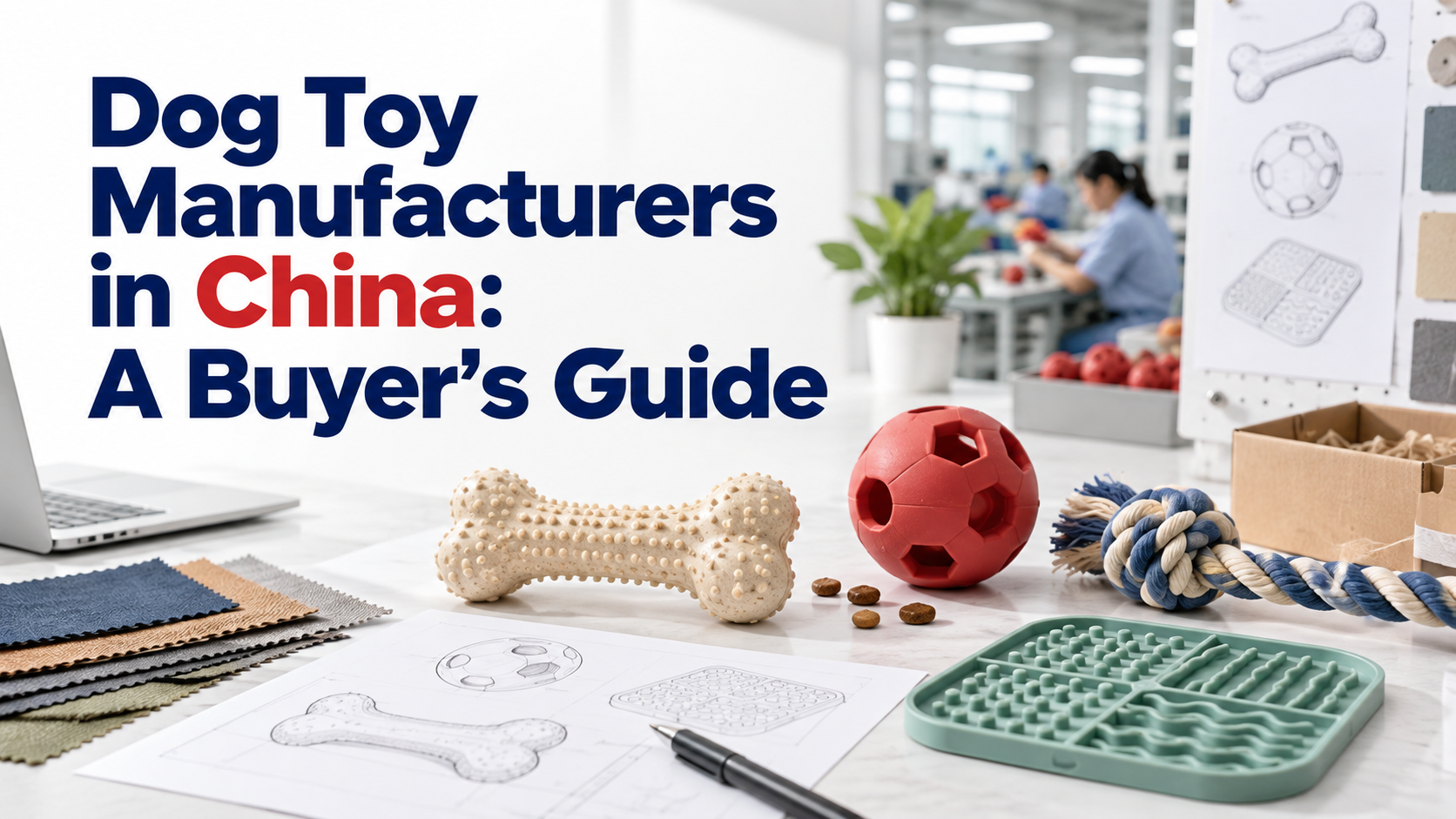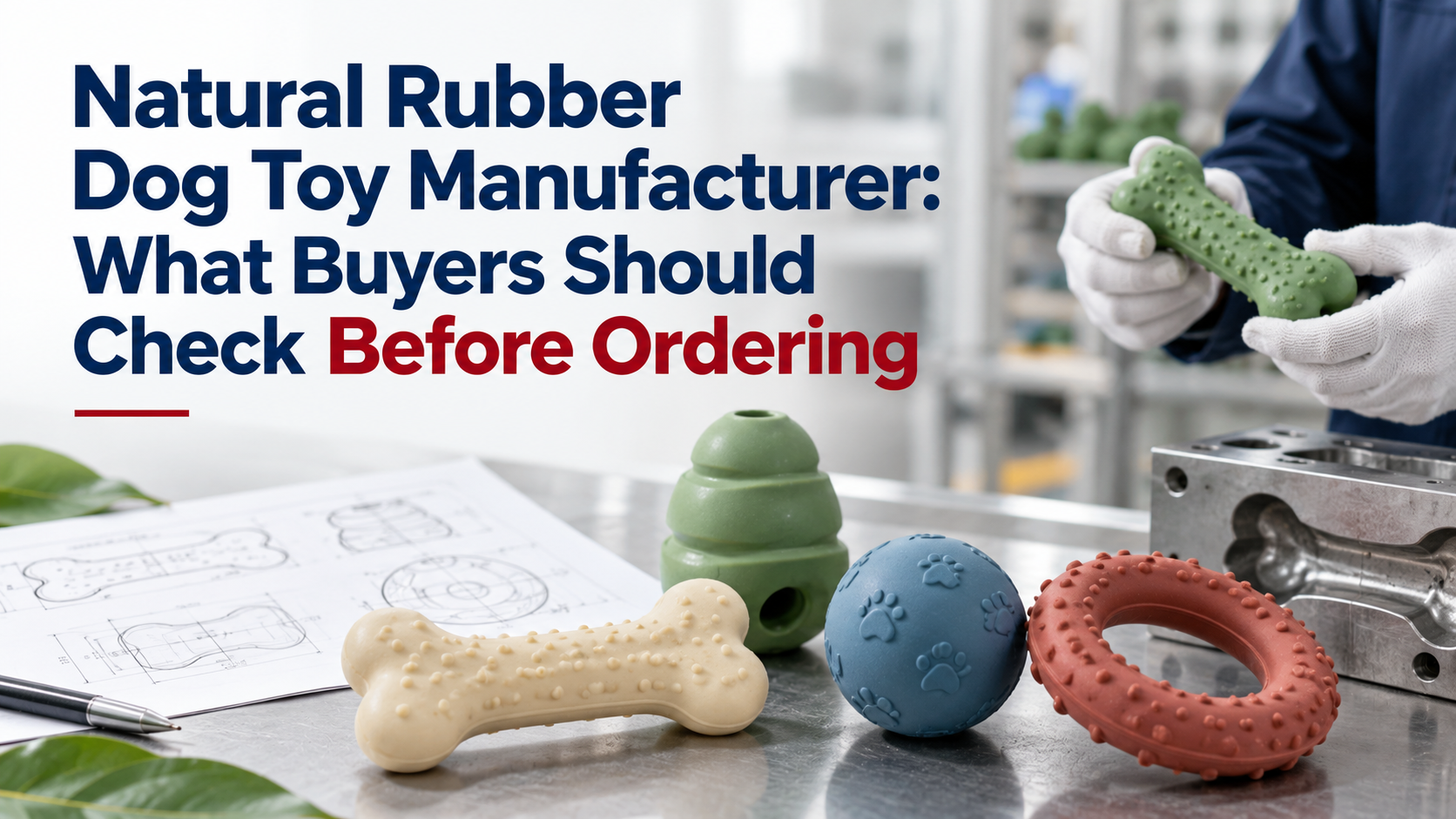
Choosing a natural rubber dog toy manufacturer requires more than comparing product photos, unit prices, and minimum order quantities. For pet brands developing chew toys, treat dispensers, rubber balls, tug

Latest Market Trends in Pet Toys: Materials, Toy Types, and Opportunities for Dog Toy Brands
Pet owners are looking for products that support chewing needs, enrichment, training, indoor activity, dental care, slow feeding, anxiety relief, and stronger interaction between pets and owners.
For pet brands, retailers, and distributors, this shift creates a clear product development direction. Dog toys need to be designed not only for appearance, but also for material safety, durability, chewing behavior, enrichment function, target dog size, cleaning convenience, packaging presentation, and long-term replacement demand.
At Newtop Pets, our product focus includes natural rubber dog toys, silicone slow feeders and lick mats, and custom OEM/ODM pet product programs for brands that need practical manufacturing support.
Market Data Snapshot
$158B U.S. pet industry spending in 2025
APPA reported U.S. pet industry expenditures reached $158 billion in 2025 and projected $165 billion in 2026.
95M U.S. pet-owning households
APPA reported 95 million U.S. households owned a pet according to its 2025 National Pet Owners Survey cited in the 2026 State of the Industry Report.
52.2% Dog toys led the pet toys market by pet type
Grand View Research reported the dog toys segment held the largest pet-type market share in 2025.
36.0% Chew toys expected to lead product type demand
Future Market Insights expects chew toys to capture approximately 36.0% of global pet toy product-type demand in 2026.
1. Dog Toys Remain the Core of the Pet Toy Market
Dog toys continue to dominate because dogs have strong daily play, chewing, training, and enrichment needs. Grand View Research reported that dog toys accounted for 52.2% of the pet toys market in 2025. Future Market Insights also identifies dogs as the leading pet type in global pet toy demand.
This matters for pet product brands because dog toys are usually repeat-purchase products. A dog may destroy, lose, or outgrow toys faster than many other durable products. Puppies, adult dogs, senior dogs, small breeds, large breeds, and aggressive chewers all need different toy types.
From a manufacturing and product development perspective, this creates room for segmented product lines, such as:
- Puppy teething toys.
- Heavy-duty chew toys.
- Treat-dispensing toys.
- Puzzle and enrichment toys.
- Fetch balls.
- Floating outdoor toys.
- Squeaky toys.
- Soft comfort toys.
- Dental texture toys.
- Slow feeding and licking toys.
The brands that perform better in this category are usually not selling “one toy for all dogs.” They are building toy collections around dog size, chewing strength, play style, and daily use scenario. If you are developing a mixed toy line, our dog toy manufacturer page outlines natural rubber, nylon, plush, squeaky, and enrichment toy directions.
2. Chew Toys Are Still One of the Strongest Product Types
Chew toys remain one of the most important dog toy categories. Future Market Insights estimates that chew toys will account for 36.0% of the global pet toys product-type segment in 2026. Grand View Research also reported that chew pet toys accounted for 25.4% of the pet toys market in 2025.
This trend is easy to understand. Chewing is a natural behavior for dogs. It can help dogs release energy, reduce boredom, and redirect destructive chewing away from furniture, shoes, or household objects. For puppies, chewing is also closely linked to teething. For adult dogs, chew toys can be part of daily enrichment and stress relief.
However, chew toys are also one of the most technically demanding categories. A good chew toy needs to be durable enough for real use, but not so hard that it may damage teeth. It also needs to avoid sharp edges, weak points, loose parts, or materials that break into unsafe pieces.
This is why material selection is critical. Natural rubber, durable thermoplastic materials, and carefully designed nylon-style products are commonly used in the chew toy category. For brands focused on safer and more flexible chewing, natural rubber is often a strong option because it provides elasticity, bite resistance, and a softer mouthfeel than many hard plastics.
 Chew toys, treat-dispensing toys, and enrichment toys are becoming more function-driven rather than purely decorative.
3. Natural Rubber Is Gaining Attention for Durable and Safer Chewing
Material choice is becoming one of the biggest differentiators in the dog toy market. Consumers are paying more attention to whether toys are safe, durable, easy to clean, and suitable for the dog’s chewing habits.
Natural rubber is especially relevant for dog toys such as chew toys, treat-dispensing toys, balls, tug toys, and enrichment toys. Compared with hard plastic, natural rubber can offer better flexibility and bounce. Compared with plush or rope toys, molded rubber toys usually have stronger resistance to chewing and tearing.
The market is not moving toward one material only. Different materials serve different toy functions. For brands, the practical material direction is:
- Natural rubber: chew toys, balls, treat toys, and tough interactive toys.
- Fabric and plush: comfort toys, light play, and small-dog products.
- Rope: tug products, with proper safety and supervision warnings.
- TPE or other flexible materials: lightweight products and certain mid-range toy structures.
- Silicone: licking toys, feeding enrichment products, and soft daily-use pet products.
- Recycled or natural fibers: eco-positioned product lines.
From a manufacturer’s point of view, natural rubber dog toys need careful control over hardness, formula, odor, wall thickness, molding quality, and post-processing. The product should not only look durable. It must also perform consistently in real chewing and play conditions.
For material comparison, see our article: Natural Rubber vs TPR vs Silicone: Which Material Wins for Chew Toys and Why.
4. Enrichment and Interactive Toys Are Moving from Niche to Mainstream
One of the clearest trends in dog toys is the growth of enrichment-based design. Pet owners increasingly understand that dogs need mental stimulation, not only physical exercise.
This supports the growth of toys such as:
- Puzzle toys.
- Treat-dispensing balls.
- Rubber toys with snack cavities.
- Lick toys.
- Slow-feeding enrichment toys.
- Snuffle mats.
- Scent-based toys.
- Training toys.
- Wobble toys.
For product development, this trend means brands should think beyond “play.” A dog toy can also be positioned as an enrichment tool, a boredom reducer, a training aid, or a feeding activity product.
This is especially important for urban pet owners. Dogs living in apartments or smaller indoor spaces may need toys that provide engagement without requiring a large outdoor area. Compact, quiet, easy-to-clean enrichment toys can fit this lifestyle well.
5. Treat-Dispensing and Food-Based Toys Are Growing Because They Extend Play Time
Treat-dispensing toys are popular because they combine play with reward. They can keep dogs engaged for longer periods and create a more active feeding experience.
This category includes rubber treat balls, hollow chew toys, puzzle feeders, licking toys, slow feeders, and toys designed to hold frozen treats or wet food. Many of these products are also connected to the broader trend of slow feeding and enrichment feeding.
For dog toy brands, treat-dispensing products have several advantages:
- They give the toy a clear function.
- They encourage repeat use.
- They can be marketed for boredom relief or enrichment.
- They are suitable for content creation and social media videos.
- They can be developed in different difficulty levels.
- They work well with food, treats, paste, and frozen recipes.
The key challenge is design. The opening size, internal cavity, wall thickness, flexibility, treat-release speed, cleaning access, and dog size all need to be considered. If the toy releases food too easily, it loses enrichment value. If it is too difficult, the dog may lose interest.
Natural rubber is a strong material for many treat-dispensing dog toys because it can be molded into hollow shapes, flexible openings, textured surfaces, and durable chew structures. One example direction is our freeze treat-dispensing dog toy.
Manufacturer’s View: Treat Toys Need Function Testing
A treat-dispensing toy should be tested with real food sizes, wet fillings, frozen recipes, and target dog sizes. The best structure is not simply the hardest or most complex one. It is the structure that keeps the dog engaged without making the product frustrating or hard to clean.
6. Plush and Comfort Toys Still Have Strong Demand, but Durability Is a Limitation
Plush toys remain popular because they are soft, lightweight, visually attractive, and suitable for gentle play. For many pet owners, plush toys are not only for chewing. Dogs may carry them, sleep with them, shake them, or use them as comfort objects.
Plush toys also perform well in seasonal collections, holiday themes, licensed designs, and social media-friendly product lines.
However, plush toys have clear limitations. They are usually not suitable for aggressive chewers. Stuffing, squeakers, threads, and loose parts may create safety concerns if the dog tears the toy apart. This does not mean plush toys are bad, but they should be positioned correctly.
A good plush toy strategy should separate:
- Comfort plush toys for gentle dogs.
- Reinforced plush toys for moderate play.
- No-stuffing plush toys for reduced mess.
- Crinkle plush toys for sound interaction.
- Squeaky plush toys for engagement.
- Seasonal plush toys for gifting and retail display.
For brands, plush toys can work well as part of a wider dog toy collection, but they should not be the only product direction if the target customers also need durable or chew-resistant options.
7. Squeaky Toys Remain Popular, but Buyers Care More About Safety and Noise Control
Squeaky toys continue to attract dogs because sound can trigger attention, excitement, and play behavior. They are common in plush toys, rubber balls, chew toys, and interactive toys.
The market opportunity is still strong, but buyer expectations are changing. Pet owners want toys that are fun without being too annoying, unsafe, or easy to destroy. For manufacturers, this means the squeaker structure must be carefully designed.
Important design considerations include:
- Whether the squeaker is securely enclosed.
- Whether the material around the squeaker is strong enough.
- Whether the toy can maintain sound after repeated biting.
- Whether the sound level is acceptable for indoor use.
- Whether the toy is suitable for the target dog size.
- Whether the toy needs a replaceable or non-removable squeaker.
Squeaky rubber toys can be a useful direction because molded rubber provides stronger structure than many low-cost plush squeaky toys. For this product direction, see our squeaky dog toy manufacturer page.
8. Sustainability Is Becoming a Product Selection Factor, but Price Still Matters
Sustainability is no longer just a marketing concept. Consumers are increasingly concerned about materials, packaging, chemical safety, plastic waste, and long-term product value.
For pet toys, sustainability can appear in several ways:
- Natural rubber instead of petroleum-based plastic.
- Recycled rubber or recycled plastic materials.
- Organic cotton or hemp rope.
- Recycled fabric for plush toys.
- FSC-certified paper packaging.
- Reduced plastic packaging.
- Durable toys designed for longer use.
- Replaceable parts instead of disposable toys.
However, sustainability must be balanced with durability and cost. Pet owners may like eco-friendly claims, but if the toy breaks too quickly or costs too much, repeat purchase may be weak. For dog toys, “eco-friendly” alone is not enough. The product also needs to be safe, functional, durable, and appropriate for the dog’s behavior.
For brands, the practical opportunity is to use sustainability as part of the value proposition, not the whole value proposition. A stronger message would be: natural rubber, durable design, safe material, reduced packaging, and practical enrichment function.
9. Value-Oriented Premiumization Is Replacing Simple Premium Pricing
The pet toy market is not moving only toward expensive products. It is moving toward products that justify their price.
APPA’s market data shows the pet industry is still growing, while Packaged Facts notes that durable pet products are facing headwinds and that opportunities remain around value, health, and wellness. This means brands cannot rely only on emotional pet-parent marketing. They need to show real product value.
In dog toys, value can come from:
- Longer durability.
- Multi-function design.
- Safer materials.
- Better fit for dog size and chewing style.
- Easy cleaning.
- Retail-ready packaging.
- Replacement or refillable features.
- Strong branding and product storytelling.
- Better after-sales trust.
This is important for wholesalers and retailers. A product with a slightly higher unit price can still be attractive if it has a better sell-through rate, fewer complaints, clearer positioning, and stronger repeat purchase potential.
10. Product Segmentation by Dog Size, Age, and Chewing Strength Is Becoming More Important
One major mistake in dog toy development is assuming one toy can suit every dog. The latest market direction points toward more precise segmentation.
Dog toys can be segmented by:
- Puppy, adult dog, or senior dog.
- Small, medium, or large breed.
- Gentle chewer, moderate chewer, or aggressive chewer.
- Indoor or outdoor use.
- Solo play or owner-interactive play.
- Food-based enrichment or non-food play.
- Dental support, training, comfort, or activity.
This segmentation helps brands create clearer product pages, packaging claims, and retail shelf logic. It also helps manufacturers design better products. A toy for a puppy should not have the same hardness, size, weight, or surface texture as a heavy-duty chew toy for a large dog.
For rubber toys, segmentation affects hardness, wall thickness, toy weight, cavity size, bounce, and flexibility. For plush toys, it affects fabric strength, seam construction, stuffing choice, and squeaker protection. For silicone enrichment products, it affects groove depth, suction strength, softness, and cleaning access.
11. E-Commerce Is Changing Toy Design and Packaging
Online retail continues to influence pet toy development. Products need to be easy to understand from images, strong in short videos, compact enough for shipping, and durable enough to reduce returns.
For e-commerce, brands need products that are:
- Easy to understand from product images.
- Strong in video demonstration.
- Compact enough for shipping.
- Durable enough to reduce returns.
- Clear in size and use instructions.
- Attractive in lifestyle photography.
- Differentiated by function or design.
For dog toys, online content is especially important. Treat-dispensing toys, wobble toys, squeaky toys, slow feeders, and lick toys are all easier to sell when buyers can see how they work. This is one reason enrichment toys and functional toys are strong for online channels.
Packaging also needs to adapt. For retail, packaging needs shelf impact. For e-commerce, packaging needs protection, cost efficiency, and clear product information. Brands selling through both channels may need flexible packaging options.
12. Safety, Compliance, and Material Transparency Are Becoming Stronger Selling Points
As pet owners become more careful, material transparency matters more. Buyers want to know what the toy is made of, whether it is suitable for chewing, whether it contains harmful substances, and whether it is appropriate for their dog’s size and behavior.
For manufacturers and brands, this means stronger attention to:
- Material selection.
- Food-contact or pet-safe material documentation where applicable.
- Heavy metal and restricted-substance testing.
- PAHs testing for rubber products when required.
- Odor control.
- Colorant safety.
- Physical structure safety.
- Labeling and warning statements.
- Batch traceability.
- Clear use instructions.
This is especially important for dog toys because the product is chewed, licked, carried in the mouth, and sometimes filled with food. A toy that looks good but uses poor material or weak structure can create complaints and damage brand trust.
For export-focused pet brands, safety documentation can also make communication with distributors, retailers, and online platforms easier. For development risks, see: Common Problems in Custom Rubber Dog Toys and How to Avoid Them.
 For custom dog toys, stable production, batch control, and inspection standards are part of the product value.
13. What This Means for Pet Toy Brands
The pet toy market still has room for growth, but it is becoming more professional. Generic, low-cost toys will continue to exist, but stronger opportunities are in functional, material-specific, and well-segmented products.
For dog toy brands, the most practical product development directions are:
- Natural rubber chew toys for durability and safety positioning.
- Treat-dispensing toys for enrichment and longer play time.
- Squeaky rubber toys for interactive engagement.
- Plush comfort toys for gentle play and seasonal collections.
- Puzzle and feeding toys for mental stimulation.
- Outdoor balls and floating toys for active dogs.
- Eco-conscious toys using natural or recycled materials.
- Size-specific and chewing-strength-specific product lines.
The key is not to follow every trend at once. A better strategy is to build a focused product collection with clear material logic, clear dog-use scenarios, and clear brand positioning.
Developing a Dog Toy Product Line?
Newtop Pets supports natural rubber dog toys, silicone feeding enrichment products, squeaky toys, treat-dispensing toys, custom colors, molded logos, packaging, sampling, and mass production for pet brands and private-label programs.
Conclusion
The latest pet toy market trends show a clear shift from simple toys to functional, safer, more durable, and more engaging products. Dog toys remain the core category, supported by large dog ownership numbers, strong replacement demand, and the growing importance of enrichment in daily pet care.
Chew toys, treat-dispensing toys, puzzle toys, squeaky toys, plush comfort toys, and eco-conscious toys all have market potential, but each requires different material and design decisions. Natural rubber is especially strong for chew, fetch, tug, and treat-dispensing applications. Silicone is better suited for licking, feeding, and slow-feeding enrichment products. Plush and fabric remain useful for comfort and light play, while recycled and natural materials can support sustainability-focused product lines.
For pet product brands, the main opportunity is to develop toys that solve real pet-owner problems: boredom, chewing, indoor activity, training, fast eating, anxiety, and safe play. The brands that combine good material choices, practical design, reliable manufacturing, and clear market positioning will be better prepared for the next stage of dog toy growth.