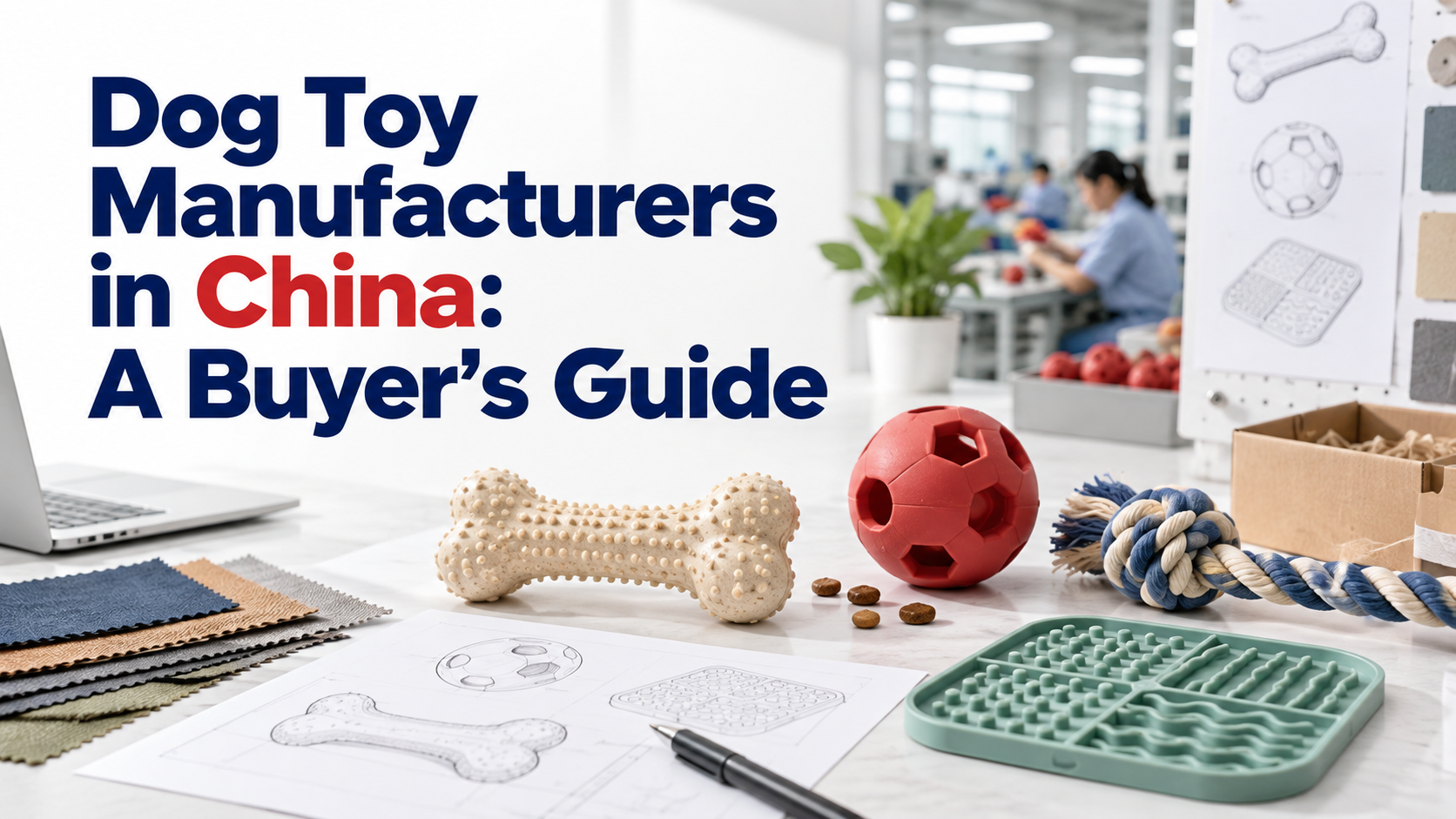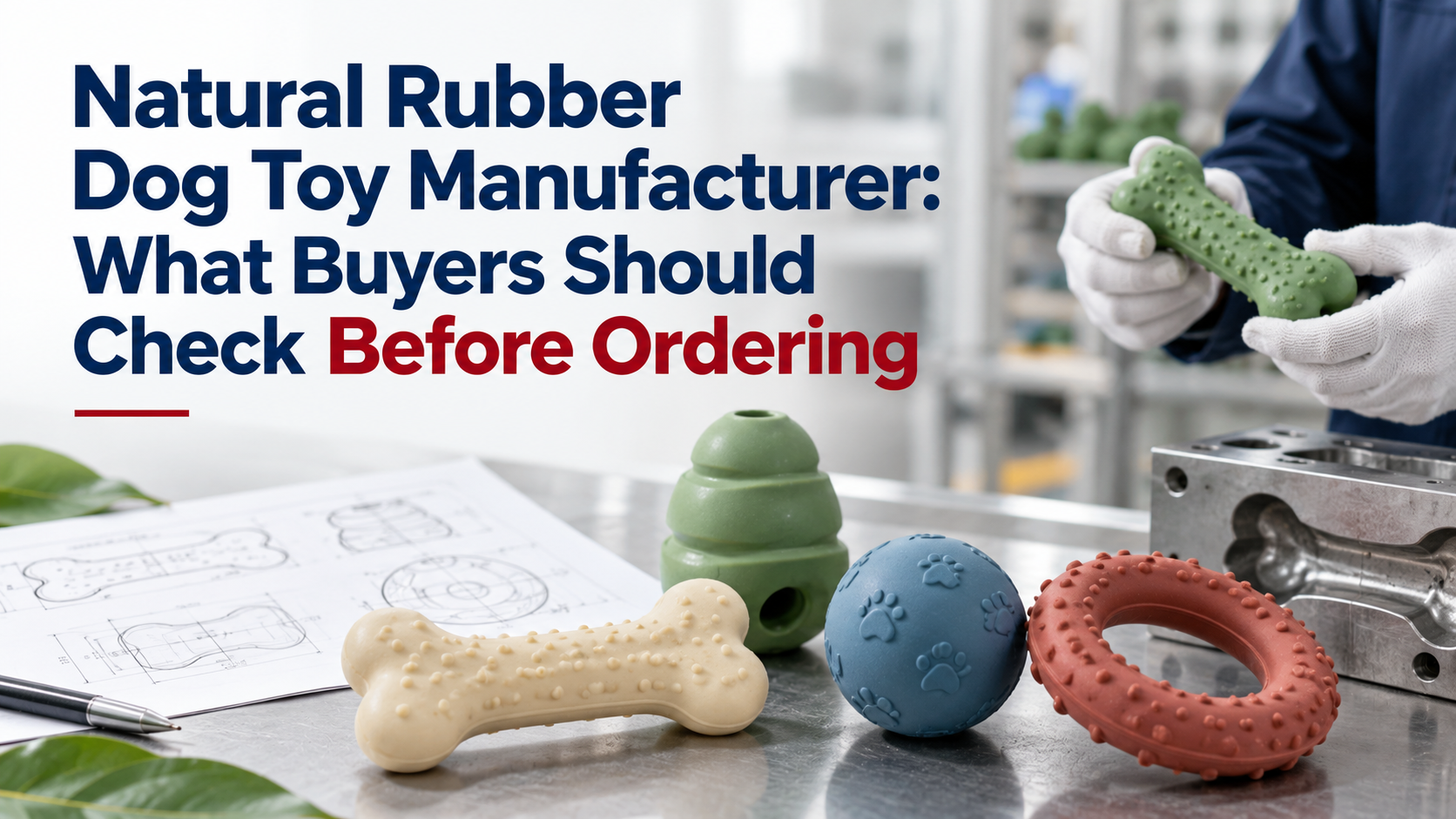
Choosing a natural rubber dog toy manufacturer requires more than comparing product photos, unit prices, and minimum order quantities. For pet brands developing chew toys, treat dispensers, rubber balls, tug

How to Choose a Reliable Pet Product Manufacturer in China
Finding the right pet product manufacturer in China is not only about comparing prices. For pet brands, wholesalers, retailers, and product developers, the manufacturer you choose can directly affect product safety, consistency, delivery time, brand reputation, and long-term profitability.
China has a mature manufacturing supply chain for silicone pet products, rubber dog toys, pet feeding accessories, grooming tools, and outdoor pet supplies. However, not every supplier is suitable for every project. Some factories are better for standard products and light customization, while others are more capable of full product development, custom mold design, private label packaging, and long-term production support.
Before choosing a pet product manufacturer, buyers should evaluate several key factors carefully.
Check Whether the Manufacturer Matches Your Product Category
The first step is to confirm whether the manufacturer has real experience with your product type.
Pet products cover many different categories, including slow feeder bowls, lick mats, pet placemats, dog bowls, treat dispensing toys, chew toys, pet brushes, travel bowls, training bags, and pet food accessories. Each category has different material requirements, molding processes, quality standards, and user expectations.
For example, silicone pet feeding products usually require food-grade silicone, stable color matching, smooth surface finishing, and good control of flexibility. Natural rubber dog toys need good durability, odor control, bite resistance, and safe material formulation. A factory that mainly produces hard plastic pet cages may not be the best choice for silicone lick mats or rubber enrichment toys.
When evaluating a manufacturer, ask whether they have produced similar products before. Product photos, sample cases, mold examples, and category experience can help you judge whether the supplier understands your market.
Understand Their Material Capabilities
Material safety is one of the most important factors in pet product manufacturing.
For pet feeding products, buyers often need food-grade silicone that can meet market expectations in the United States, Europe, and other regions. For dog toys, natural rubber or other safe elastomer materials may be used depending on the design and target market.
A reliable manufacturer should be able to explain the materials they use, not just give general claims such as “safe” or “non-toxic.” You should ask about material grade, hardness range, color options, odor control, post-curing process, and whether the material is suitable for the intended application.
For feeding-related products, material compliance may involve food-contact safety expectations. For toys, durability and chemical safety are also important. The right manufacturer should be able to support material documentation, testing guidance, and reasonable compliance preparation according to your target market.
Review Certifications and Testing Support
Certifications do not automatically prove that every product is perfect, but they show whether the factory has basic management systems and compliance awareness.
Depending on your product and market, you may need to consider factory certifications, material test reports, product-specific testing, food-contact testing, chemical safety testing, or social compliance audits. Common topics include FDA-related food-contact expectations, LFGB for the German and EU market, REACH-related chemical control, and other buyer-specific requirements.
Before placing an order, clarify which documents the manufacturer can provide and which tests need to be arranged separately. Some certificates apply to the factory. Some apply to raw materials. Some apply only to a specific finished product. These should not be confused.
A professional supplier should be clear about the difference between factory certification, material report, and final product testing.
Evaluate Customization Ability
Many pet product buyers are not only looking for existing products. They may need custom colors, private label logos, packaging design, surface textures, product size adjustments, or completely new molded products.
A reliable manufacturer should be able to support different levels of customization:
Light customization usually includes color changes, logo application, and packaging changes based on existing molds.
Medium customization may include small adjustments to size, pattern, surface texture, or functional details.
Full customization usually requires new product development, 3D design, mold making, sampling, testing, and mass production.
Before choosing a supplier, make sure they can support the level of customization your project requires. If you need a new product structure, the manufacturer should be able to discuss drawings, mold cost, sample lead time, tooling feasibility, and expected production risks.
Check Mold Development and Engineering Support
For molded silicone and rubber pet products, mold quality has a direct influence on the final product.
Good mold design affects product shape, surface quality, flashing control, thickness consistency, demolding performance, production efficiency, and long-term stability. Poor mold design can lead to uneven edges, difficult production, high defect rates, and inconsistent product dimensions.
If your project requires a custom mold, ask the manufacturer about their mold development process. Important questions include:
Can they review your 3D file or product idea?
Can they help optimize the structure for production?
What mold material will be used?
How many cavities will the mold have?
How long will sampling take?
What changes are possible after the first sample?
A factory with engineering support can often help reduce avoidable problems before mass production.
Ask About MOQ, Lead Time, and Production Flexibility
MOQ and lead time are practical issues for every buyer.
Some factories only accept large orders. Others can support smaller trial orders based on existing molds. If you are testing a new product line, a lower MOQ may help reduce risk. If you already have stable sales, larger production volume may help reduce unit cost.
However, buyers should understand that MOQ depends on several factors, including material preparation, color matching, mold setup, production efficiency, packaging, and labor cost. A very low MOQ may not always be realistic for fully customized products.
Lead time also depends on whether you are ordering existing products, changing colors and logos, developing packaging, or opening a new mold. A good manufacturer should give a realistic timeline instead of making vague promises.
Examine Quality Control Procedures
Quality control should not only happen at the end of production. It should be part of the full manufacturing process.
A professional pet product manufacturer should have inspection steps for raw materials, production setup, in-process quality, finished products, and packaging. For silicone and rubber products, quality control may include checking color consistency, hardness, weight, dimensions, surface defects, odor, flashing, deformation, and packaging accuracy.
For pet feeding products, the surface should be clean, smooth, and suitable for daily use. For dog toys, the structure should be checked for durability, safety, and consistency. For private label products, logos and packaging details also need careful inspection.
Before ordering, ask the manufacturer how they inspect goods and whether they can provide inspection photos, reports, or third-party inspection support when needed.
Request Samples Before Mass Production
Samples are essential before bulk orders, especially for custom products.
A product may look good in photos but feel different in real use. For silicone bowls or lick mats, you may need to check flexibility, suction performance, texture depth, color, thickness, and cleaning convenience. For rubber dog toys, you may need to evaluate smell, bounce, softness, durability, and treat-dispensing performance.
For custom products, the first sample is also a chance to check whether the design is suitable for production. Some details may need adjustment after sampling. A serious manufacturer should be willing to discuss feedback and explain what can or cannot be changed.
Never rely only on catalog images when launching a new pet product.
Look at Communication Quality
Good communication is often a sign of good project management.
A reliable manufacturer should be able to answer questions clearly, confirm details in writing, and explain technical issues in a professional way. They should not avoid questions about material, testing, mold cost, production lead time, packaging, or quality standards.
Pay attention to how the supplier communicates before the order. If they are unclear, slow, or careless during the quotation stage, the same problems may continue during production.
Good communication is especially important for custom pet products because small details can affect the final result. Product dimensions, logo size, color code, packaging layout, label requirements, carton size, and inspection standards should all be confirmed before production.
Confirm Packaging and Private Label Support
For many pet brands and retailers, packaging is not just a protective layer. It is part of the product experience.
A manufacturer with private label experience should be able to support packaging options such as color boxes, hang tags, labels, insert cards, polybags, display packaging, and carton marks. They should also understand the importance of barcode placement, warning information, product names, material descriptions, and market-specific labeling requirements.
If you plan to sell through retail stores, online marketplaces, or distributors, ask the manufacturer whether they can help prepare products in a retail-ready format.
Consider Intellectual Property and Confidentiality
If you are developing a new product design, confidentiality matters.
A reliable manufacturer should respect your product idea, design files, mold ownership agreement, branding information, and customer-specific packaging. For custom projects, it is reasonable to discuss NDA support, mold ownership, and whether your customized design will be protected from general resale.
This is especially important for brands launching differentiated pet products or seasonal collections.
12. Do Not Choose Based on Price Alone
Price is important, but the lowest price is not always the safest option.
A very low quotation may mean lower material quality, weak quality control, unstable production, poor packaging, or hidden costs later. In pet products, problems with material safety, odor, durability, or inconsistent quality can damage customer trust.
A better approach is to compare the full value: material, manufacturing experience, customization ability, sample quality, documentation support, communication, lead time, inspection, and after-sales response.
The right manufacturer should help you control cost while still protecting product quality and brand reputation.
Recommended Questions to Ask a Pet Product Manufacturer
Before starting a project, you can ask the following questions:
What pet product categories do you mainly produce?
Do you have experience with silicone feeding products or natural rubber dog toys?
Can you support custom colors, logos, packaging, or new mold development?
What material options do you recommend for this product?
Can you provide material reports or testing support?
What is the MOQ for existing molds and custom molds?
How long does sampling usually take?
How do you control quality during mass production?
Can you support private label packaging?
How do you handle mold ownership and confidential product designs?
The answers to these questions can help you identify whether the supplier is suitable for your project.
Conclusion
Choosing a reliable pet product manufacturer in China requires more than checking a catalog and comparing unit prices. Buyers should evaluate product experience, material safety, customization ability, mold development, quality control, compliance support, communication, packaging service, and long-term production reliability.
A good manufacturer should not only produce the product. They should also help you reduce sourcing risk, improve product consistency, and support your brand from idea to mass production.
About Newtop Pets

Newtop Pets is a custom manufacturer focused on silicone pet feeding products and natural rubber dog toys. We support pet brands, wholesalers, retailers, and product developers with OEM/ODM services, including product design support, mold development, sampling, custom colors, logo options, private label packaging, and mass production.
Our product range includes silicone slow feeder bowls, lick mats, pet placemats, dog bowls, pet feeding accessories, travel pet products, and molded natural rubber dog toys. We focus on safe materials, stable manufacturing, practical customization, and quality control for pet product projects.
If you are developing a new pet product line or looking for a reliable custom pet product manufacturer, Newtop Pets can support your project from concept to production.